Archives
- 2026-07
- 2026-06
- 2026-05
- 2026-04
- 2026-03
- 2026-02
- 2026-01
- 2025-12
- 2025-11
- 2025-10
- 2025-09
- 2025-04
- 2025-03
- 2025-02
- 2025-01
- 2024-12
- 2024-11
- 2024-10
- 2024-09
- 2024-08
- 2024-07
- 2024-06
- 2024-05
- 2024-04
- 2024-03
- 2024-02
- 2024-01
- 2023-12
- 2023-11
- 2023-10
- 2023-09
- 2023-08
- 2023-07
- 2023-06
- 2023-05
- 2023-04
- 2023-03
- 2023-02
- 2023-01
- 2022-12
- 2022-11
- 2022-10
- 2022-09
- 2022-08
- 2022-07
- 2022-06
- 2022-05
- 2022-04
- 2022-03
- 2022-02
- 2022-01
- 2021-12
- 2021-11
- 2021-10
- 2021-09
- 2021-08
- 2021-07
- 2021-06
- 2021-05
- 2021-04
- 2021-03
- 2021-02
- 2021-01
- 2020-12
- 2020-11
- 2020-10
- 2020-09
- 2020-08
- 2020-07
- 2020-06
- 2020-05
- 2020-04
- 2020-03
- 2020-02
- 2020-01
- 2019-12
- 2019-11
- 2019-10
- 2019-09
- 2019-08
- 2019-07
- 2019-06
- 2019-05
- 2019-04
- 2018-11
- 2018-10
- 2018-07
-
br Materials and methods br
2022-02-01
Materials and methods Results Discussion Accurate HER2 assessment for patients with invasive breast cancer is crucial to determining which patients may benefit from HER2-targeted therapy. The most recent ASCO/CAP guidelines have again redefined HER2 gene amplification as determined by dual-
-
Type IIIa b the ligand dependent
2022-02-01
Type IIIa/b – the ligand dependent oncogenic Hh pathway (paracrine or reverse paracrine mode) is mediated by paracrine activation and is usually encountered in embryonic development, but also in installation and progression of cancer [58]. Specifically, Hh ligands secreted by malignant Y-27632 acti
-
The recently de orphaned G protein coupled receptor GPCR GPR
2022-02-01
The recently de-orphaned G-protein coupled receptor (GPCR), GPR55, is activated endogenously by L-α-lysophosphatidylinositol (LPI), a lipid signaling molecule, as well as N-arachidonoyl glycine (NAGly) and numerous endo, phyto, and synthetic cannabinoids (Oka et al., 2007, Henstridge et al., 2010, H
-
The ability of FFA to elevate intracellular levels of
2022-02-01
The ability of FFA4 to elevate intracellular levels of Ca2+5, 38, 39, 40 provided early predictions of a key role of the phosphoinositidase C-linked G proteins Gq and/or G11 in transduction of signals from this receptor, while later studies that examined production of inositol phosphates [41] provid
-
br Material and methods br Results br Discussion Organisms h
2022-02-01
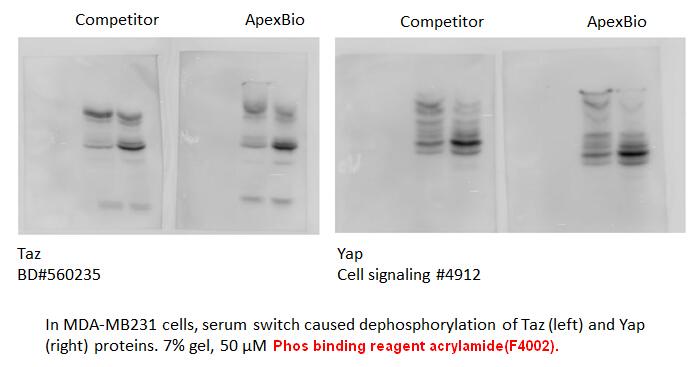
Material and methods Results Discussion Organisms have developed a variety of anti-glycation defense mechanisms. In BMS777607 receptor to the aldose-reductase-pathway or 2-oxoaldehyde dehydrogenase-pathway, the glyoxalase system is the only mechanism, which is not restricted to liver [19].
-
br Introduction The generic antifibrinolytic
2022-02-01

Introduction The generic antifibrinolytic drug tranexamic pitavastatin (TXA) inhibits the protein-protein interaction between plasminogen and fibrin [9]. TXA is frequently used to reduce bleeding in various hemorrhagic conditions, such as during surgical procedures in the heart [19]. However, tr
-
The most ubiquitous serine threonine phosphatases such as PP
2022-01-31

The most ubiquitous serine/threonine phosphatases, such as PP1, PP2A, and PP2B are known to contribute to the majority of phosphatase activity in the heart [4]. Dysregulation of these and other PPs have been found in numerous CVDs, including heart failure (HF), and may play a critical role in reduce
-
The effects of FFAR and
2022-01-31
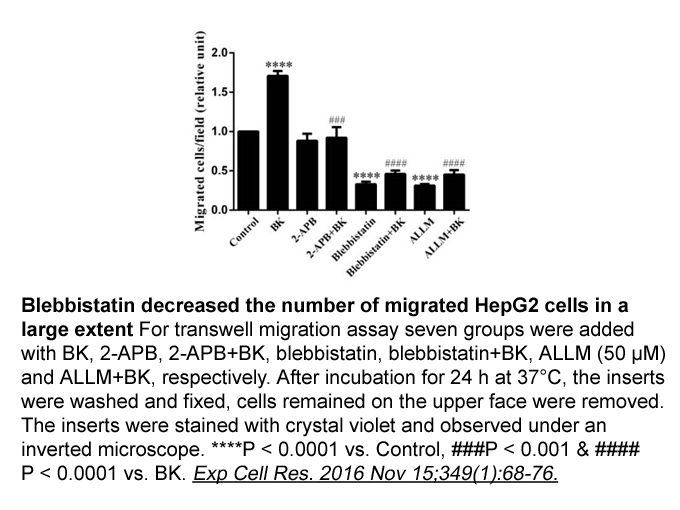
The effects of FFAR1 and FFAR2 activation in different tissues have been reported in several species (Hara et al., 2014). Herein, we report the first evidence for differential expression of FFAR1 and FFAR2 during the peripartal period in the liver of dairy cows that differ in liver metabolism, based
-
All models used here rely on WT FGFR which is
2022-01-31

All models used here rely on WT FGFR3, which is activated by exogenous FGF ligand to alter chondrocyte proliferation and differentiation. This approach toward modeling the aberrant FGFR signaling in cartilage differs from the actual situation in ACH or TD, where the chondrocytes are exposed to long-
-
br Results and discussion br Conclusion
2022-01-31
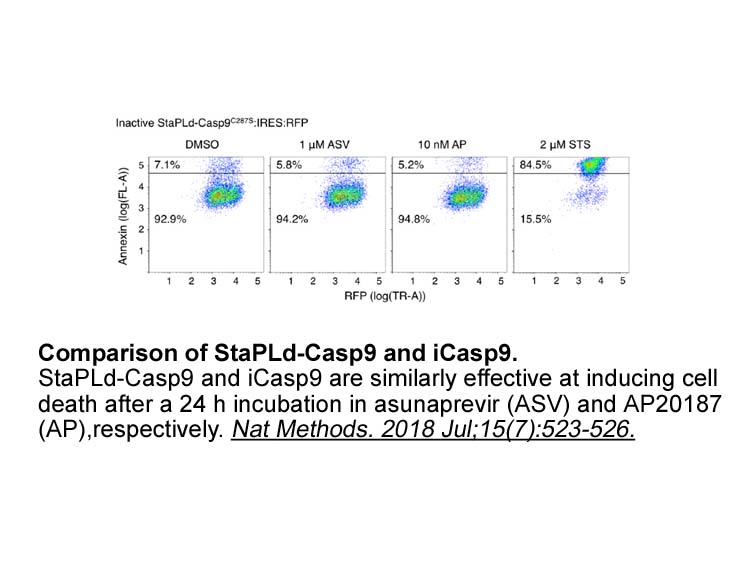
Results and discussion Conclusion In summary, we designed and discovered a series of novel GPR40 agonists containing 3,5-dimethylisoxazole with improved tPSA and ideal cLog P. Most of these compounds were confirmed as excellent GPR40 agonists in vitro. Especially, compound 11k exhibited robust
-
br Interference in coagulation assays Conversely to heparin
2022-01-31

Interference in coagulation assays Conversely to heparin, or heparin like calcitonin gene related peptide (LMWH, Fondaparinux, Sodium Danaparoid), which are catalytic inhibitors requiring the presence of AT for their activity, as depicted on Fig. 2, DiXaIs are directly targeted to Factor Xa, and
-
Histamine receptors were largely linked with
2022-01-31
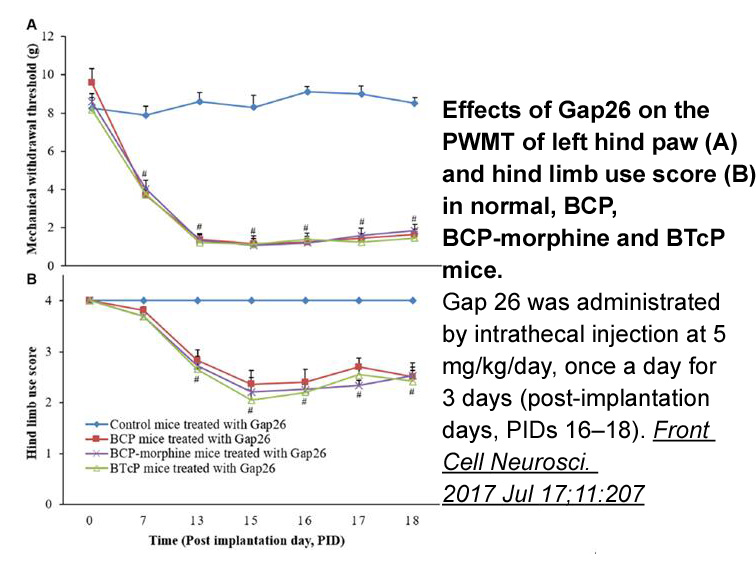
Histamine receptors were largely linked with allergic and inflammatory reactions before the recognition of the histamine H3R in 1983 that proved its function as auto- as well as heteroreceptor at pre- and postsynaptic membranes and demonstrated its intense regulating influence on release of numerous
-
br Materials and methods br Results br
2022-01-30

Materials and methods Results Discussion Serum HBsAg is not only an important serological marker for the screening and diagnosis of HBV infection but also an important indicator for the treatment of hepatitis B [15]. Jaroszewicz et al. [4] and Nguyen et al. [8] reported that the HBsAg level
-
br Experimental br Acknowledgments This research was support
2022-01-30
Experimental Acknowledgments This research was supported by the Korea Research Foundation (2013R1A1A2007509). The authors thank to Dr. Moon Ho Son (Dong-A Pharm. Co. Ltd) for hGPR119 agonist activity assay. We also thank to Pharmacal Research Institute and Central Laboratory of Kangwon Nationa
-
Glutamate is a ubiquitous principal excitatory neurotransmit
2022-01-30

Glutamate is a ubiquitous principal excitatory neurotransmitter in the PF 04418948 australia that plays a central role in a variety of brain functions (Delgado, 2013, Hawkins, 2009). Several studies reported that CSF glutamate was associated with mental illness, including major depressive disorder,
16989 records 549/1133 page Previous Next First page 上5页 546547548549550 下5页 Last page